
The Rise of Micro-Festivals: Why Boutique Gatherings Outperform Mega-Events

The Rise of Micro-Festivals: Why Boutique Gatherings Outperform Mega-Events

The Rise of Micro-Festivals: Why Boutique Gatherings Outperform Mega-Events
The Breaking Point of Mega-Festival Culture
There was a time when an open field, a modest stage, and a few thousand curious listeners could create the entire architecture of a festival. Music travelled through grass, dust, and shared attention. The attraction was not only the performer, but the temporary community formed around the sound. The modern music festival grew from that tradition, as this history of the music festival makes clear, yet many of today”s largest events have moved far from that communal starting point.
For attendees, the friction is increasingly difficult to ignore. Ticket tiers climb, premium areas multiply, and the supposedly seamless festival journey becomes a sequence of queues, app updates, security checks, shuttle transfers, and crowded viewing pens. VIP access may promise relief, but it can also create new bottlenecks between ordinary ticket holders and the headline experience. After hours of travel and waiting, even a strong set can feel like one more item to collect rather than a moment to inhabit.
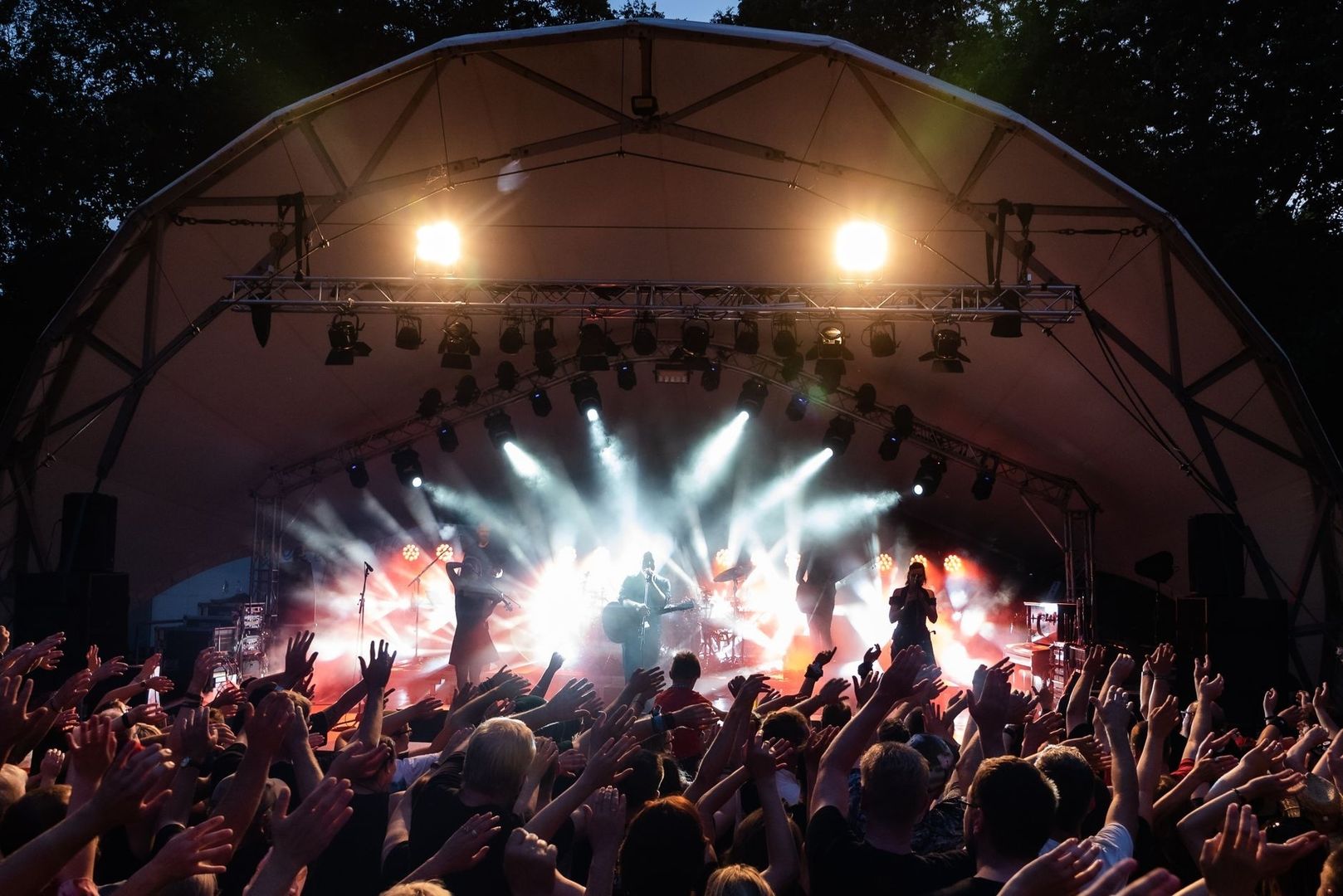
A counter-movement is now gaining force. Micro-festivals, generally capped below 3,000 people, trade volume for intimacy and spectacle for identity. Their appeal is not that they offer less, but that they remove distractions that have accumulated around the music. A carefully selected lineup, a walkable site, and a crowd united by genuine interest can restore the sense that a festival is a cultural gathering rather than a temporary retail district.
The Heavy Toll of Industrial Scale
Large festivals operate on a financial model with very little room for error. Artist fees have risen, production equipment costs more, insurance and deposits absorb substantial capital, and severe weather can threaten an entire weekend. Organizers must commit to infrastructure months before ticket demand is certain. Meanwhile, audiences are choosing between festivals, stadium tours, and everyday expenses at a time when inflation has made discretionary spending more cautious.
The consequences are visible across the sector. Industry analysis has described a fall in the number of UK festivals from roughly 600 in 2019 to 482 in 2023, followed by dozens of subsequent cancellations and permanent closures across recent seasons. An overview of the pressure facing the market in 2026 is available through recent festival industry analysis. The cancellation and shuttering of events like Rhode Island”s Ocean State Oyster Festival also illustrates how scheduling, site logistics, and rising operational overhead can make a much-loved gathering untenable, even after nearly a decade of community popularity. Scale does not guarantee resilience; in many cases, it simply multiplies exposure to volatile market shocks.
The business environment has become serious enough to draw formal scrutiny. A UK Parliament live music inquiry documented the economic pressures affecting the wider live sector, including rising costs and fragile operating conditions. A smaller festival can still face the same weather, licensing, and insurance realities, but it has fewer fixed costs and fewer moving parts. Its survival may depend on disciplined programming and early community support rather than a gamble on a single global headliner.
| Pressure point | Mega-event exposure | Micro-festival response |
|---|---|---|
| Talent costs | Heavy dependence on expensive headline acts | Balanced lineups with regional and emerging artists |
| Site logistics | Large transport networks, distant stages, and complex crowd flows | Walkable layouts and simpler production plans |
| Audience experience | Queues, crowd compression, and tiered access | Shorter distances and more direct participation |
| Financial risk | High deposits, infrastructure costs, and cancellation exposure | Controlled capacity and adaptable operating models |
The psychological toll matters as much as the balance sheet. Endless transit between stages, security friction, packed viewing areas, and the fear of losing friends in a moving crowd can turn anticipation into vigilance. A smaller footprint does not eliminate discomfort, but it makes the day legible. You can find the next stage, recognize familiar faces, return to a campsite or local lodging without crossing a temporary city, and allow an unexpected performance to become part of the plan.
Curating for Connection Instead of Algorithms
Micro-festivals are strongest when they behave less like playlists and more like complete musical journeys. Instead of gathering every commercially visible act, their programmers may build around a subgenre, a label community, a region, or a particular relationship between sound and place. Deep house, minimal, Detroit soul, balearic music, experimental electronics, folk traditions, and left-field rock can each support a focused gathering where the audience understands the aesthetic before the first note begins.
That focus changes the way a lineup feels. A long-form DJ set can develop patiently rather than competing with a parade of shortened appearances. A local artist may share a bill with an established name without being treated as filler. Boutique festival guides have highlighted events built around audiophile systems, extended performances, record selection, food, wellness, and distinctive landscapes. The setting becomes part of the curation: a forest, historic estate, coastal site, or rural clearing can shape how the music is heard.
The physical distance between performer and audience also shrinks. An intimate dance floor allows a musician to read the room, adjust the pace, and sustain tension without relying on oversized screens or constant spectacle. Acoustic clarity replaces sheer volume as a marker of quality. The crowd, in turn, becomes less anonymous. Shared taste creates an immediate social language, whether that means discussing a selector”s record choice, following a local band between venues, or discovering an unfamiliar artist because a trusted friend insists on staying for the set.
- Distinctive identity: The event stands for a sound, scene, or cultural idea rather than a generic collection of names.
- Longer attention spans: Extended sets and fewer clashes encourage listeners to stay with an artist”s development.
- Artist accessibility: Emerging performers often receive meaningful placement and direct audience feedback.
- Place-based programming: Food, architecture, landscape, and local culture contribute to the experience without overwhelming it.
- Community continuity: Returning attendees and artists help the festival develop a recognizable character over time.
This approach is not a rejection of ambition. It is a different definition of success. A small event can sell out without expanding, preserve a DIY atmosphere, and become more valuable precisely because it refuses to turn every available square metre into revenue. In a crowded cultural market, a clear point of view is often more memorable than a larger poster.
Radical Sustainability and Human-Scale Safety
Smaller capacity can reduce the pressure placed on a site, but sustainability claims need careful framing. A 2023 report from A Greener Future examined 17 UK and European festivals and found that all travel combined accounted for an average of 58 percent of emissions, while food and drink averaged 35 percent. The report also found that larger festivals could have lower emissions per person per day in some circumstances, especially when efficient infrastructure was used. Size alone is not a climate solution.
Even so, micro-festivals can make responsible decisions faster and with greater precision. Fewer attendees usually mean less waste, lower water demand, smaller generator requirements, and less concentrated damage to paths, grass, and local services. A compact event can prioritize grid electricity where available, biodiesel or renewable power, reusable cup systems, local food, clear recycling stations, and transport information designed around the actual audience rather than a vast regional influx.
Travel remains decisive. A festival with 2,000 attendees can still create a substantial footprint if everyone flies or drives alone, while a larger event may benefit from rail links, coaches, or shared transport. The strongest boutique organizers therefore treat mobility as part of the artistic and ecological brief. They work with nearby accommodation, encourage ride sharing, provide precise arrival guidance, and avoid pretending that a beautiful rural site is automatically a low-impact site.
- Choose shared, public, or lower-impact transport whenever practical.
- Bring durable essentials, refill water, and avoid disposable camping equipment.
- Use marked paths, respect wildlife, and leave the site as it was found.
- Support local food producers and vendors instead of importing every provision.
- Read the event”s safety, accessibility, weather, and emergency information before arrival.
Safety also becomes more human-scale. At a smaller gathering, staff, volunteers, artists, and attendees can recognize problems earlier. Harm reduction can be visible without feeling militarized, while clear welfare points, sober support, hydration, consent policies, and trained stewards create practical networks of care. This does not mean that a small festival is automatically safe. It means the environment can make mutual responsibility easier to practice, replacing the assumption that surveillance alone will solve every problem.
How to Navigate and Support the Micro-Festival Movement
Finding the right event requires a little more curiosity than scrolling through the biggest ticket platforms. Independent gatherings often travel through labels, local promoters, record shops, community radio, artist newsletters, venue calendars, and specialist music publications. Look for programming language that reveals a point of view: long sets, limited capacity, local collaborations, unusual sites, sound-system culture, workshops, or a clear commitment to emerging artists.
- Start with a scene, not a destination. Identify the sound communities, labels, DJs, bands, or cultural spaces that consistently earn your attention.
- Read the full event description. Check the capacity, location, transport guidance, accommodation options, accessibility information, and stated values.
- Study the lineup as a journey. Notice how artists relate to one another, where local talent appears, and whether the schedule allows proper listening rather than constant rushing.
- Buy early when confidence is high. Early tickets provide essential cash flow for independent promoters and can help an event secure suppliers and artists.
- Plan lightly but responsibly. Choose practical clothing, ear protection, reusable bottles, weather protection, and only the camping equipment genuinely needed.
- Support beyond the gate. Buy music directly from artists, pay attention to local vendors, volunteer when appropriate, and share accurate information about the event.
On site, respect is part of the ticket. Follow the event”s photography policy, ask before recording people, keep pathways clear, and remember that a small crowd does not erase personal boundaries. Treat the location as an ecosystem rather than a disposable backdrop. Avoid damaging vegetation, take every item of waste home or to the correct station, and use water and sanitation facilities thoughtfully.
Independent promoters also benefit from feedback that is specific rather than simply enthusiastic. Tell them which access information worked, where signage failed, whether welfare facilities were visible, and which artists deserve another invitation. If the event offers volunteering, approach with realistic expectations and clarify hours, responsibilities, food, accommodation, and access before committing. Direct artist support matters just as much. Purchase releases, merchandise, and tickets through legitimate channels, attend smaller club shows, and follow performers after a memorable set.
The movement will not remain healthy through nostalgia alone. It needs audiences willing to arrive early, pay fair prices, accept limited convenience, and understand why a carefully run event may not offer endless stages, luxury add-ons, or a globally famous headliner. In return, attendees receive something difficult to manufacture at scale: a weekend with a discernible pulse, where every decision feels connected to the music and the people gathered to hear it.
Reclaiming the Soul of Live Sound on Human Terms
Micro-festivals offer a regenerative answer to commercial event exhaustion. Their strength lies in controlled scale, deliberate curation, local relationships, and a willingness to treat the audience as a community rather than a market segment. They can still face inflation, weather, transport emissions, licensing demands, and uncertain ticket sales, but their structure gives organizers more room to adapt before a problem becomes a public collapse.
The most compelling gathering may not be the one with the tallest stage or the longest artist list. It may be the one where the sound system is tuned with care, the crowd can move without fear, the local landscape is respected, and an unfamiliar artist earns a room”s full attention. Choosing these events is a practical vote for intimacy, sensory immersion, and cultural independence. For festivalgoers ready to trade impersonal spectacle for intentional connection, the next essential set may be waiting somewhere much smaller.
